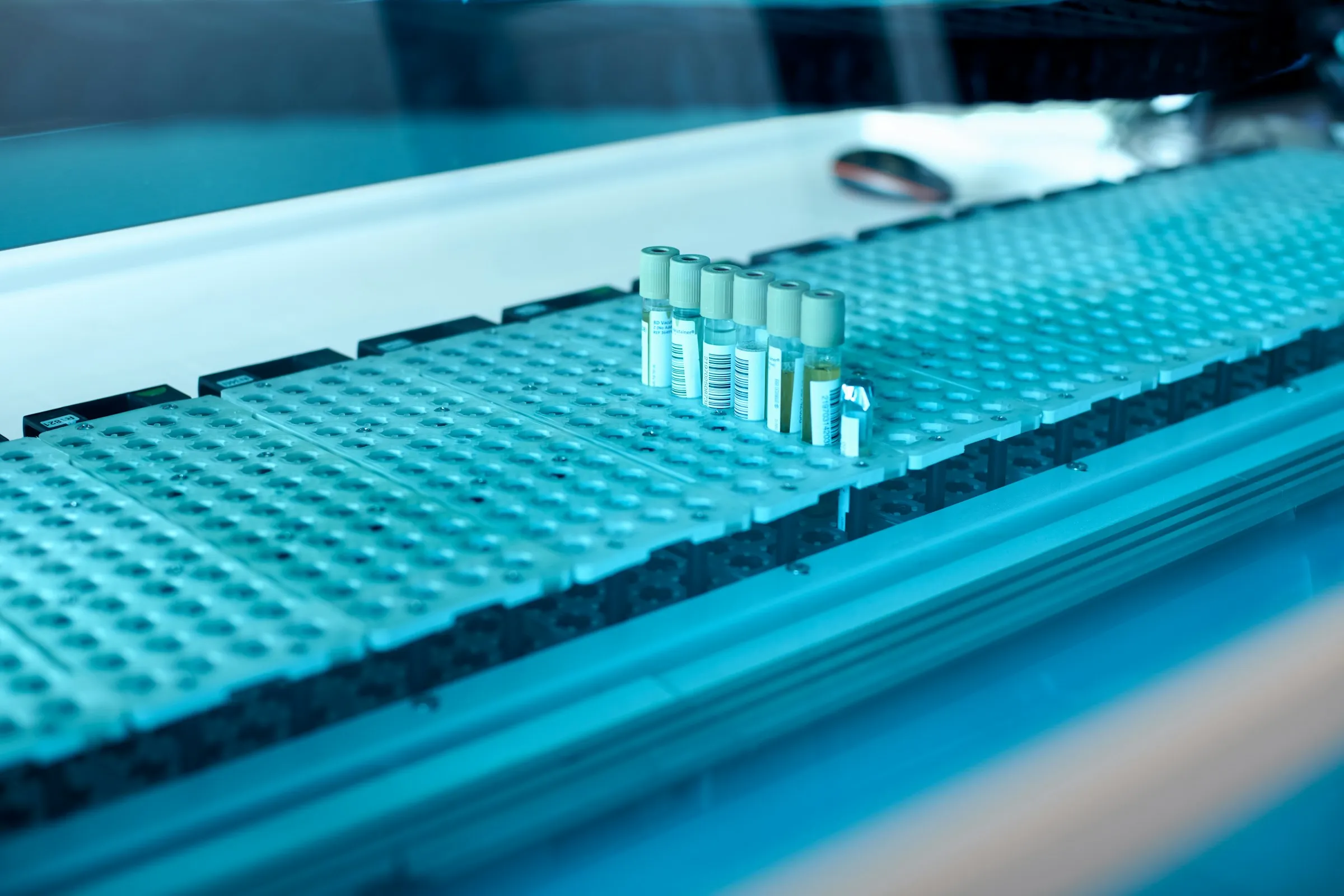
Photo by Testalize.me on Unsplash
Engineering project
Software engineering for genetics research
Develop tools to collect, process and analyse sequencing data for genetics research.
The project
This genetics research programme used bioinformatics tools to study transposons, DNA sequences that can move within the genome. Working with the scientific team, I developed and maintained tools for reference-data collection, sequence processing and comparison of gene and transposon activity across samples.
Engineering approach
The integration work connects sequencing formats, scientific APIs and analysis libraries. Processing preserves the relationships between samples, genomic positions and annotations during conversion. Each quantification workflow has its own preparation steps before statistical analysis. Python parallelism and Cython functions target specific operations, including reference collection and sequence comparison.
Work delivered
Reusable Python tools, a MongoDB reference collection and analysis notebooks in Python and R. They produce filtered sequences, statistical tables and visualisations for reviewing results with the researchers.
My contribution
- Python collector for Dfam references, with parallel requests and storage of annotations and consensus sequences in MongoDB
- Python tool using BioBlend to retrieve sequences through the Galaxy API, monitor jobs and produce FASTA files from genomic coordinates
- Preprocessing, alignment and consolidation modules for Alu transposon research using Python, Biopython and pysam. Parallel processing, Cython Hamming-distance calculations and FASTQ preprocessing organised with Snakemake
- RNA-Seq analysis notebooks using Salmon, STAR/RSEM or HISAT2/StringTie outputs, and transposon analysis using TEtranscripts or SalmonTE. Matrix preparation with pandas and Ensembl annotation mapping
- Statistical analysis in R using DESeq2, limma/voom or Ballgown according to the input data, followed by visualisations and exports for scientific interpretation
Functional overview
Four software workstreams within one research programme. The Dfam collector and Galaxy tool provide access to references and sequences. Processing modules prepare observations, while Python and R notebooks compare gene and transposon expression across samples.
 MongoDB
 Python
 R
Components and flows
- Parallel Dfam reference collection and storage of annotations and consensus sequences in MongoDB
- Genomic coordinates sent to the Galaxy API, job monitoring with BioBlend and FASTA sequence retrieval
- Read preprocessing, alignment, filtering and consolidation for Alu transposon research
- RNA-Seq quantifications feed matrix preparation, statistical analysis and visualisations
Related capabilities
Services by sector
Other projects
Discuss your project
A discussion of your project’s design, development and production deployment.